

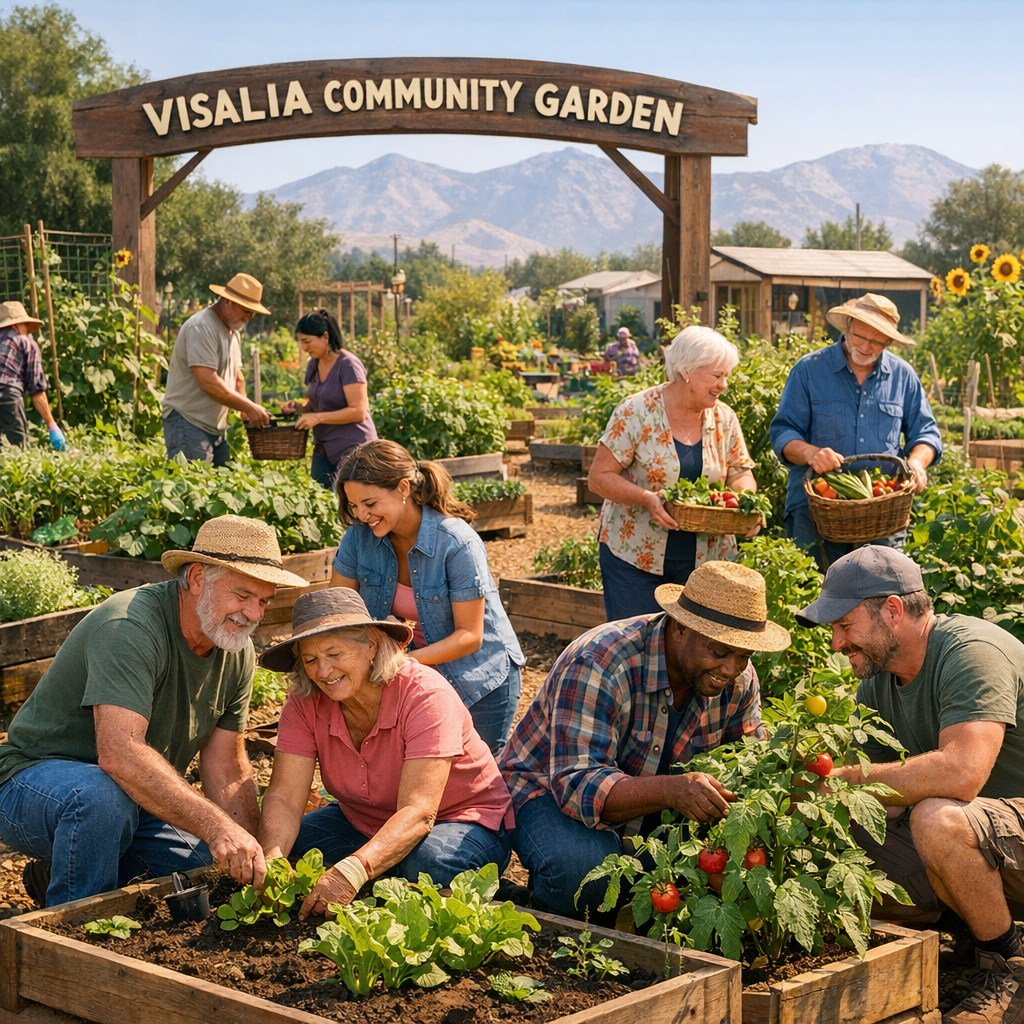
Hi, I’m James Ortega. Over the last few years, I’ve walked past vacant lots, old schoolyards, and empty corners around Visalia and wondered: what if these places were full of life?
The Roots of Something Bigger
Visalia’s own General Plan recognizes the value of community gardens—not just as spaces to grow fresh produce, but as open areas that offer education, shared stewardship, and hope for neighborhoods with fewer resources. These gardens are envisioned as free or affordable to residents, with support from the city in the form of water, insurance, and shared planning. Engagement from local voices is meant to be foundational. Many of these ideas derive from long-term goals set in open space and environmental justice plans. What’s especially striking is the ambition to make gardens accessible in communities where food access has historically been limited.
More Than Vegetables: Health, Community, Culture
Gardens do much more than feed stomachs. Research across California shows these shared green spaces improve physical activity, mental wellbeing, health literacy, and strengthen social bonds—you meet people across generations, share stories and skills, and discover together. For immigrant and older communities, gardens often become cultural touchstones—places where food, language, and tradition grow alongside tomatoes and squash.
Addressing Visalia’s Food Landscape
Many areas in Visalia, particularly Oval Park and East Visalia, have less access to grocery stores within walking distance. Where supermarkets are distant or expensive, community gardens and farmers’ markets step in to fill the gap. At Visalia’s farmers’ markets, CalFresh and WIC vouchers are accepted, often matched dollar-for-dollar, making healthy food more affordable for low-income families. Gardens can similarly offer place-based solutions—offering fresh food, teaching food-growing skills, and creating affordable local options.
Starting Strong—What It Takes
If you’re thinking, like me, that your neighborhood could use one of these green patches, here are steps that matter:
- Identify a site that’s safe, has access to water, and is centrally located.
- Organize local residents—people who want to grow, share, teach, and tend.
- Work with city staff or nonprofits to navigate insurance, zoning, design, and operational needs.
- Plan for ongoing maintenance. A garden is a long-term project: organizers, schedules, shared labor.
- Make it inclusive: choose culturally meaningful crops, offer plots to families or youth, share harvests. Food grows better when everyone feels involved.
Harvesting What We Sow
The rewards begin small—fresh salsa from sun-ripened tomatoes, shy smiles from neighbors you didn’t know. Over time, the rewards become bigger: healthier bodies, revived lots, stronger identity. For Visalia, where many of us come from working families, where costs loom large, where connection to land and culture can feel lost, community gardens offer much-needed roots.
If you believe your block, your street, your patch of town could benefit, maybe it’s time to dig in—literally and figuratively. Even one garden plot can be a seed of change.